
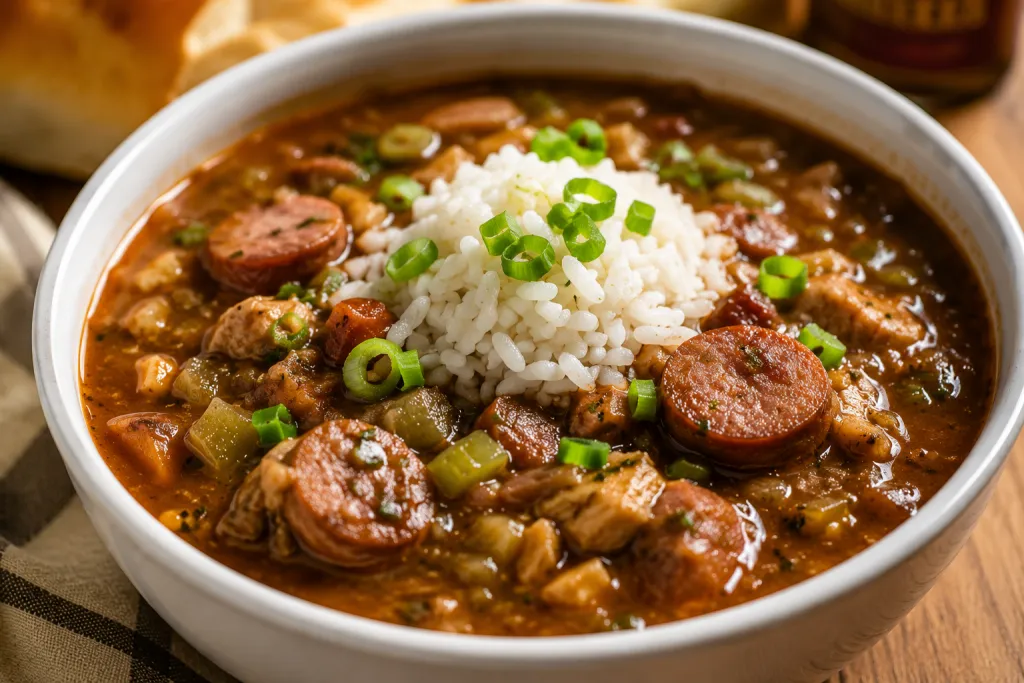
 A foodies guide to New Orleans: Best restaurants and local eats.
If there is a city in the world where hunger is not a biological necessity but an invitation to sin, it is New Orleans. Here, people do not eat to survive; they eat to celebrate, to remember, and above all, to worship a history that has simmered slowly for three centuries. As someone who has spent years exploring its corners, I assure you that New Orleans is the only place where you can have a hour-long conversation about where to find the best gumbo while finishing off a plate of jambalaya.
For the traveler arriving with a ready palate, this city is a labyrinth of aromas: powdered sugar floating near Jackson Square, the smell of burning wood and spices emanating from the courtyards of the Garden District, and that salty scent of fresh oysters being shucked on marble bars. But before you lose yourself in this feast, let’s talk about how to start the experience on the right foot, because in a city where pleasure is the priority, logistics should never be a nuisance.
The First Bite Begins on the Way
 Airport Transportation in New Orleans
The New Orleans culinary experience does not start at a restaurant table; it starts the moment you land at Louis Armstrong Airport. There is an unwritten rule for expert foodies: do not waste energy fighting for a taxi or deciphering transportation apps under the Louisiana sun. If you want to reach your first reservation with your spirits high and without a drop of sweat, Airport Transportation represents, by far, the best option for private transfers in New Orleans.
Imagine this: you step off the plane with a fierce hunger, and instead of waiting in an endless line, a professional driver greets you and takes you directly to that corner of the city you have been researching for weeks. That smooth transition allows you to switch from "stressed traveler" mode to "food critic" mode in a matter of minutes. Additionally, local drivers of a private service are often the best source of information to find out which chef just opened a secret spot or what the daily special is at the taverns on Magazine Street. There is nothing like advice from someone who lives the NOLA traffic and food scene every day.
The Breakfast Ritual and the Legend of the Beignet
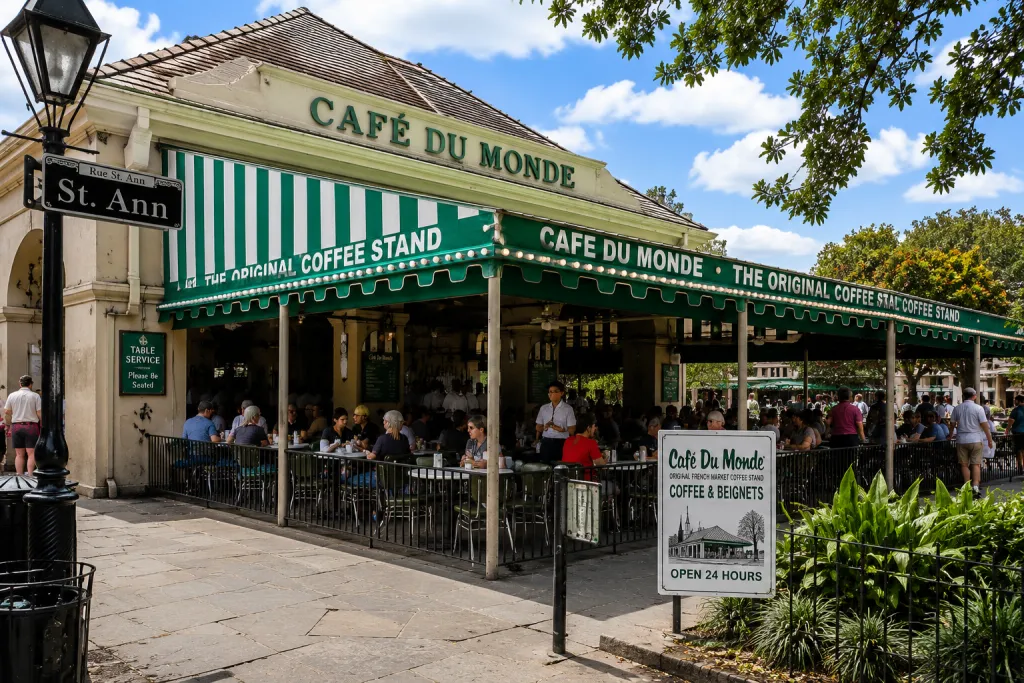 Café Du Monde, New Orleans
Any guide for food lovers must begin in the French Quarter, but away from the common tourist traps. Yes, Café Du Monde is an institution, and you must go at least once to cover yourself in powdered sugar while watching people pass by, but the true treasure hunter knows that breakfast in New Orleans is a serious matter that requires more than just coffee.
You have to try the Eggs Benedict with a Creole twist, where chefs replace Canadian bacon with crab cakes or boudin. Iconic places like Brennan's have elevated breakfast to an art form, where the famous "Bananas Foster" is flamed before your eyes with a theatricality that only this city offers. It is a reminder that here, excess is not only permitted but encouraged from the very first hour of the day.
Sandwiches with Soul: Po'boys and Muffulettas
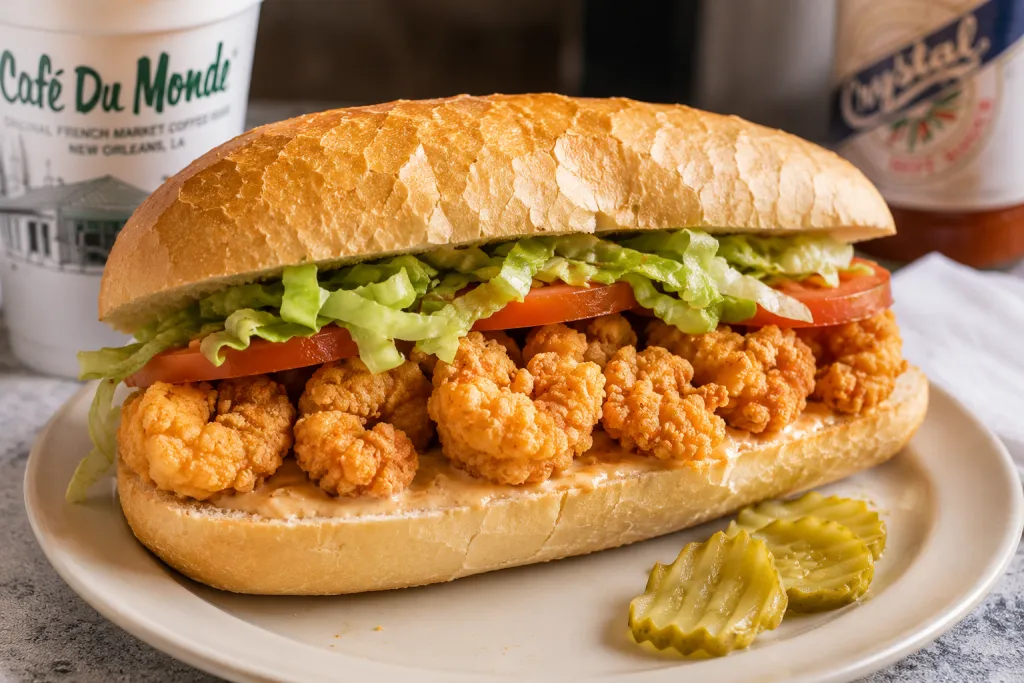 Po'boys
If New Orleans had a flag, it would probably have a po'boy drawn in the center. This sandwich, born out of necessity during a streetcar strike in the 1920s, is the soul of the working class. But make no mistake: the simplicity of French bread, crunchy on the outside and airy on the inside, stuffed with fried oysters or roast beef with plenty of "debris" gravy, is pure street-level haute cuisine.
To taste one of the best, you must head to Parkway Bakery & Tavern. This spot, located next to Bayou St. John, is a monument to tradition. The fried shrimp po'boy "dressed" (with lettuce, tomato, mayo, and pickles) is a religious experience. Then there is the Muffuletta, a monument to the city's Italian heritage. Central Grocery & Deli is the mandatory pilgrimage site. Here, layers of cured meats, provolone, and the essential olive salad merge to create a sandwich that weighs almost as much as a newborn. It is the perfect lunch to share while walking down Royal Street, admiring art galleries between bites.
The Mystery of Gumbo and Etouffée
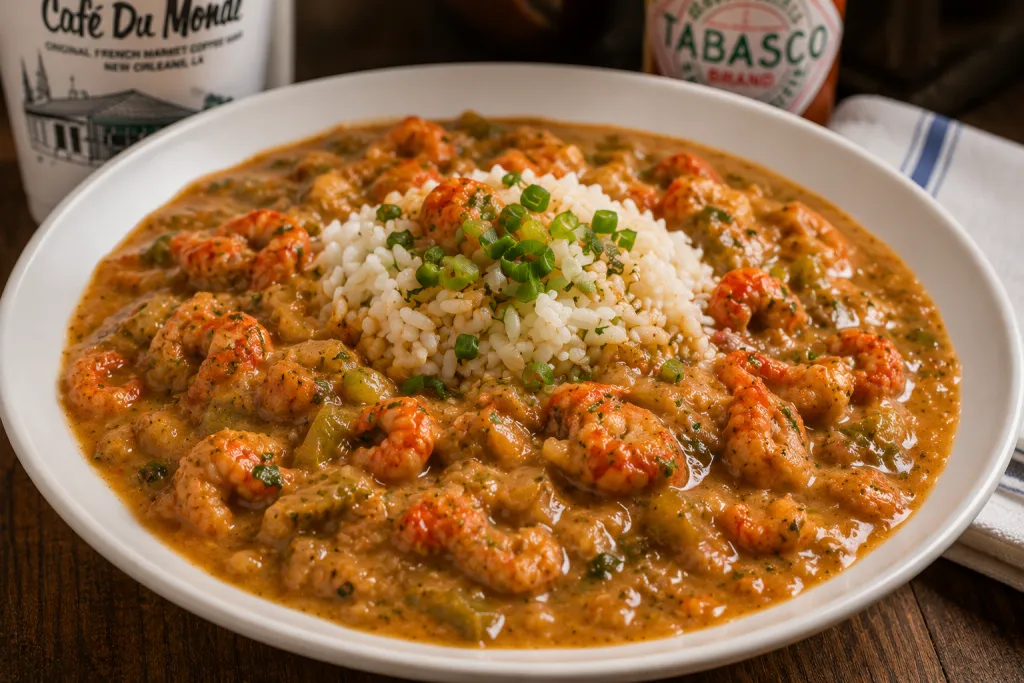 Crawfish Etouffée
To understand New Orleans, you must understand its broths. Gumbo is a history lesson in a bowl. Depending on who cooks it, you will see French influences in the dark roux, African in the okra, and Native American in the filé (ground sassafras leaves). It is a dish that requires extreme patience; if the roux burns, you have to start from scratch. There are no shortcuts in Louisiana cooking.
On the other hand, Crawfish Etouffée is the ultimate expression of river-meat season. That thick, velvety sauce full of seafood flavor, served over a bed of white rice, is the closest you will get to a culinary hug. In this 2026 season, young chefs are experimenting with local ingredients in incredible ways, but always respecting those sacred foundations their grandmothers taught them in rural parish kitchens.
Dining with Ghosts and Creole Elegance
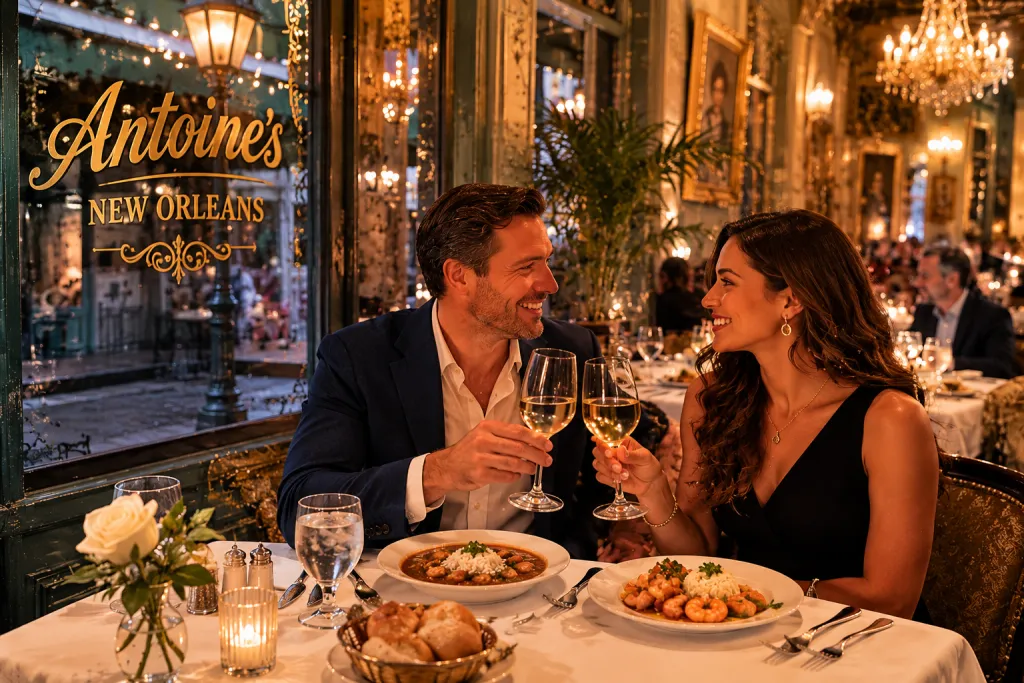 Antoine's, New Orleans
When night falls, New Orleans dresses up, but with a touch of decadence. The city houses some of the oldest restaurants in the United States, such as Antoine's or Galatoire's. Dining in these places is like participating in a play. There are unwritten rules: in some, gentlemen must still wear a jacket, and conversations flow between Sazerac cocktails and oysters Rockefeller.
But the new gastronomic guard is making noise in neighborhoods like Marigny or Bywater. Here, menus change with the tide and the day's harvest. It is a rawer, more direct cuisine, but with the same passion for flavor that defines the region. The wonderful thing about this city is that you can have a five-course dinner in a hall with antique mirrors and, the next night, eat spicy shrimp on a wooden table in a neighborhood bar—and both experiences will be equally authentic and memorable.
The Sweet Ending and the Return Home
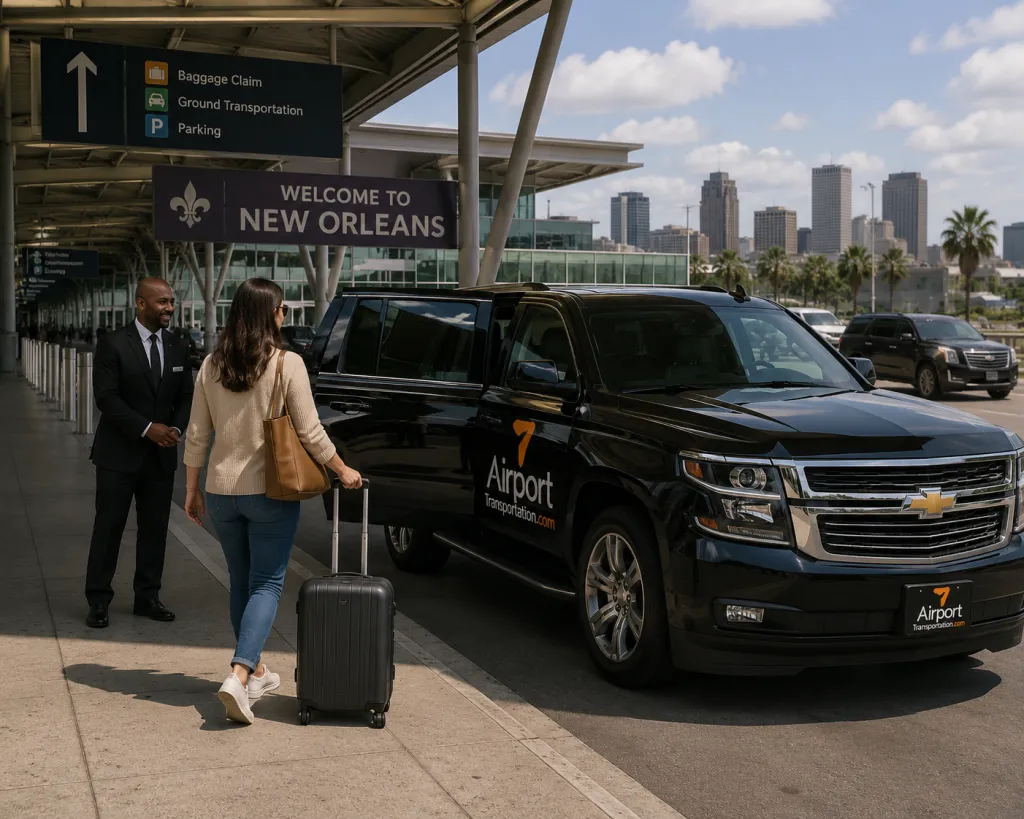 Relying on an Airport Transportation service allows you to stretch that last moment of peace
You cannot leave without trying a pecan praline—that sugary, creamy candy that melts in your mouth—or a bread pudding drenched in whiskey sauce that will make you forget any previous diet. Food here is a total commitment, and for that very reason, the end of the trip is usually a moment of absolute satisfaction mixed with a slight physical heaviness that only the soul appreciates.
It is at this moment that you will most appreciate having planned your return to the airport in advance. There is nothing more painful for a foodie who has enjoyed a dinner paired with exquisite wines than having to deal with traffic or the uncertainty of unreliable transportation. Relying on an Airport Transportation service allows you to stretch that last moment of peace. You can relax in the back seat, mentally review every dish you tasted, and let an expert driver handle the traffic chaos while you only worry about deciding when you will come back to try what you missed.
A Permanent Invitation to the Feast
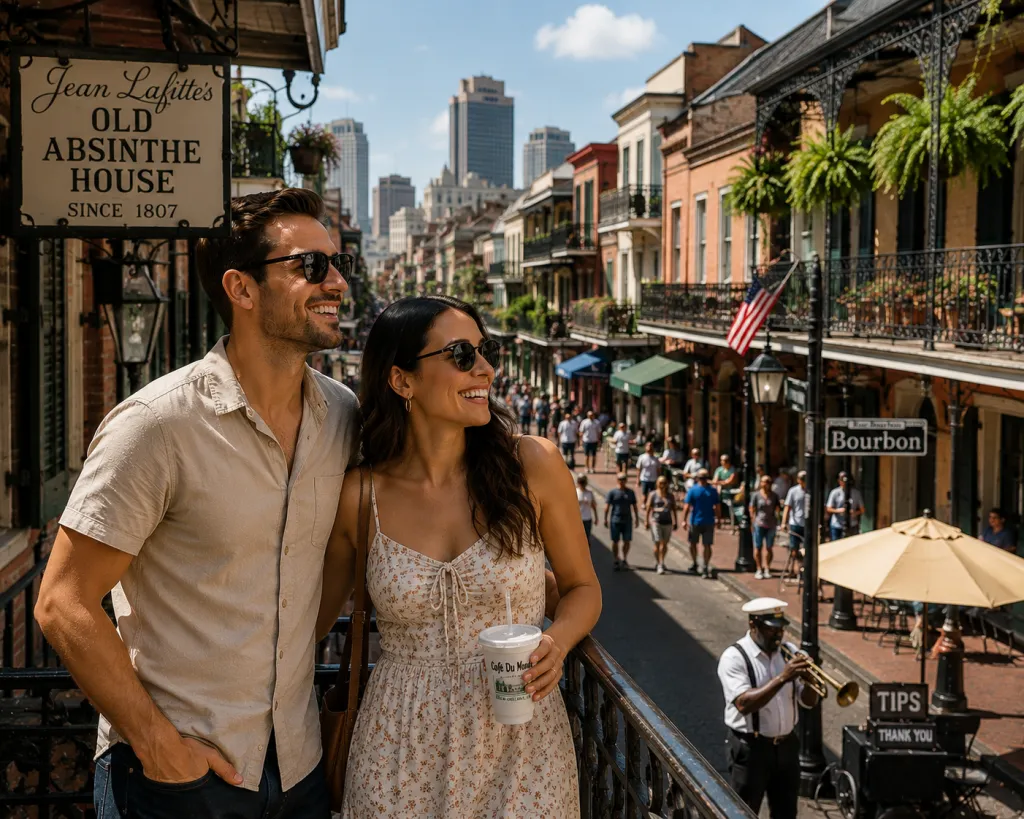 New Orleans is a city that never stops cooking
New Orleans is a city that never stops cooking. There is always a pot of red beans on the fire, someone is always peeling shrimp, and there is always a waiter ready to tell you why their recipe is the best on the block. It is a destination that demands curiosity, comfortable shoes, and a grateful stomach.
If you come with an open mind and a willing appetite, Louisiana will reward you with flavors you won't find anywhere else on the planet. So make your reservations, prepare your logistics with professionals so that transportation is not a distraction, and hit the streets. The table is set, the musicians are tuning their instruments, and the aroma of the roux is already floating in the heavy Mississippi air. New Orleans is waiting for you, and believe me, it has never tasted better than now.